
South Korean omnibus film “Citizen Pane” presents six little satires painfully and realistically funny in each own way. All of them surely have something to say about the current social issues of the South Korean society, and I must tell you that they are not merely laughing matters at all. They may look too absurd to some of you at times, but, believe me, they are actually reflecting the South Korean society a lot in one way or another, and I could not help but become bitter even while frequently being amused during my viewing.
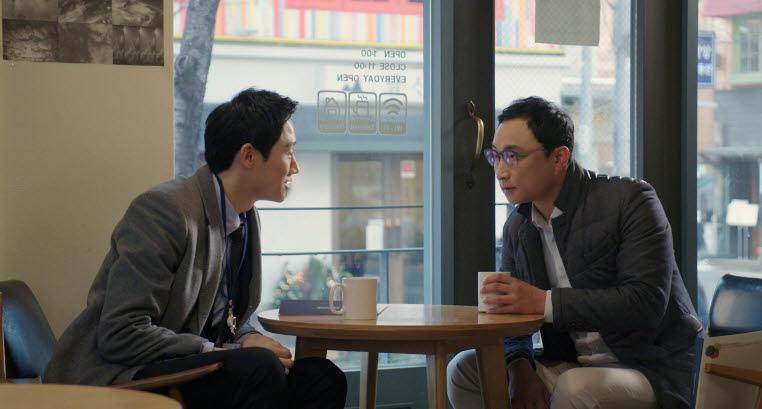
The prologue part, directed by Yoon Seong-ho, sets the tone for the next five parts to follow. The camera just observes the seemingly plain conversation between an employee of some big corporation and the owner of a small company outsourced by that corporation. but then these two figures’ conversation becomes increasingly absurd as they gleefully boast about how slyly they handle their business matters, and their superficial hypocrisy, which is embodied well by Kim Kyung-il and Yang Hyun-min, is accentuated further by the frequent utilization of laugh track.
The second part, titled “Haribo”, is about a little conflict between two young ex-lovers on their pet cat named, yes, Haribo. Although Haribo was initially supposed to be handed to one of these two young people, both of these two young people turn out to have each own reason for not being able to take care of Haribo, and that naturally sparks another argument between them, while their cat is rather obvious to what is going on between its two owners. Under Kim So-hyoung’s deft direction, Kim Woo-kyum and Kim So-hyoung are effortless in their comic chemistry, and the cat which plays their characters’ cat in this part surely steals the show with its natural cuteness.

The third part, “Where You Live Becomes You”, is directed by Park Dong-hoon, and it focuses on the private conversation between a concerned father and his married daughter. The father is not so pleased because his married daughter, who is incidentally pregnant, is going back to his hometown Gwangju along with her husband, and there is an ironic aspect in how he tries to persuade his daughter to change her mind. Because of the longtime social prejudice against his hometown and its people due to their dark political history involved with the dictatorship period of South Korea, he and his family have always tried to hide their background, but now he imposes the same social prejudice on his daughter.
Of course, the daughter immediately makes a shrewd counterargument in front of her father as emphasizing how things have changed at present, but then there comes another ironic twist as expected. Jung Seung-gil and Jo Yun-seo are believable as their characters pull and push each other, and it certainly helps that they play their material absolutely straight to the end without any self-conscious sense of irony on the surface.
The fourth part, titled “Sincerity”, revolves around the heated discussion between two female company employees who must finish and then post the ‘sincere’ online public statement about one ridiculous online controversy surrounding a ‘misandronistic’ online comment made by a certain colleague of theirs in public as a part of company promotion. No matter how much they try, they are reminded again and again of how outrageous and unjust the controversy really is, and the situation soon becomes quite hysterical to our bitter amusement, because what they are coping with is not so far from our reality in South Korea. Yes, there are lots of free-range online male trolls out there in South Korea frequently accusing anything to piss them off of ‘misandry’, and I still remember well how some local corporations recently bent themselves to these loathsome pricks’ petty and superficial online protests.
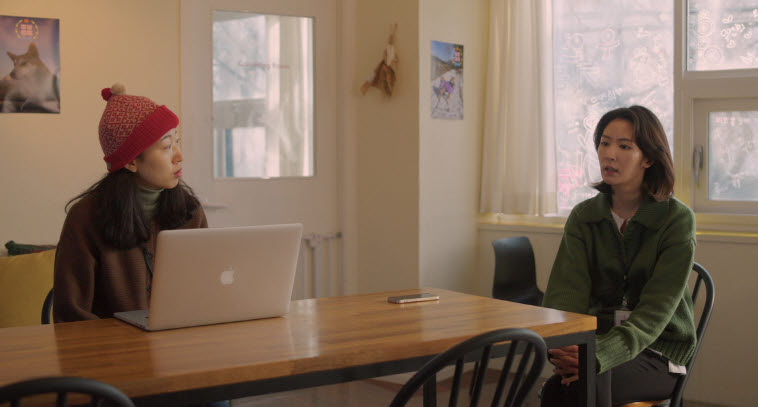
Director Choi Ha-na does not mince any word at all as the situation becomes all the more ridiculous for her two main figures. Her two performers, Sin Sa-rang and Oh Kyung-hwa, are simply hilarious as their contrasting characters desperately try to handle their imminent matter, and a dog appearing along with them in this part holds its own little spot as well as that cat in “Haribo”.
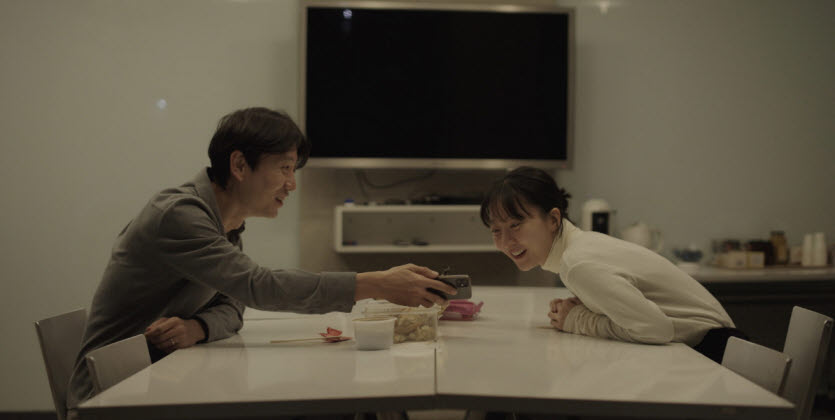
The fifth part, titled “Hands in Hands”, is directed by Song Hyeon-ju, and it is more lightweight than others in comparison. Seo Byuk-joon and Yoon Gai play a young couple who is going to have the moment of culmination for their longtime relationship, but, alas, they soon come to face how much they are different from each other, and we are left with lots of doubt and skepticism just like another character in this part, who is silently but memorably played by Kim Geum-won. Sure, love can resolve lots of things, but will they really overcome?
The last part, “A New Mind”, is about a toxic workplace environment. Kim Jun-seok and Lee Tae-kyoung play a very insensitive male supervisor and a young woman working under him, and director Han In-mi skillfully handles the two situations which feel different at first but eventually end up showing what a lousy human being that male supervisor really is – no matter how much he feels regretful later.
On the whole, each of the six parts of “Citizen Pane” achieves each own small goal in one way or another as making some sharp points on their respective social issues. The movie is funny indeed, but its numerous laughs always come with the painful reminders of our reality in South Korea, and it surely deserves more audiences for more talks and discussions.


 Seongyong's Private Place