
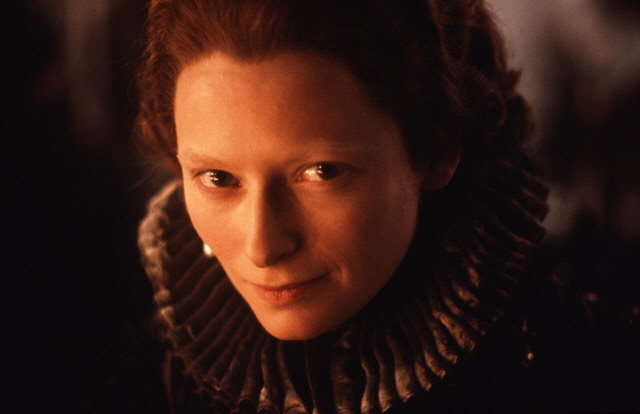
Sally Porter’s 1992 film “Orlando”, whose 4k remastered version recently came to South Korean theaters, is a distinctively poetic work on gender identity and individuality. Based on the 1928 novel of the same name by Virginia Woolf, the movie freely and boldly flows across a long passage of time along with its timeless titular figure, and the result is quite intriguing and mesmerizing to say the least.
The movie has no problem with wholeheartedly embracing its utterly preposterous story setting right from the very beginning. In England at the beginning of the 17th century, Orlando (Tilda Swinton) is a strikingly beautiful young man who is incidentally the sole heir of his nobleman family, and the movie quickly and succinctly establishes how odd and distinctive he is in his androgynous appearance. While he is expected to inherit the title and estate of his old father someday, this idiosyncratic lad is more interested in following his happiness and artistic passion as shown from the opening scene, and we get a bit of amusement when he hurriedly prepares for the arrival of Queen Elizabeth I along with his parents.
The queen, who is memorably played by Quentin Crisp with gusto, becomes quite fascinated with Orlando right from when she sets her eyes on him, and Orlando soon finds himself becoming one of her favourite subjects. The queen later commands that he shall not grow old forever, and, what do you do, this odd command of hers turns out to be quite effective on him during the next several centuries.
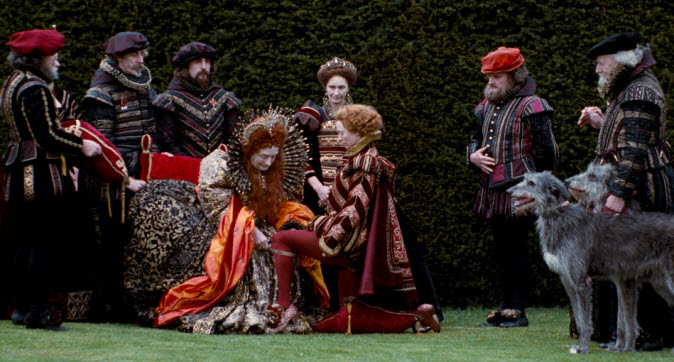
The following middle act focuses on how Orlando tries on one male role after another while remaining quite youthful during next several decades. When his father dies not long after the queen’s death, he is expected to be the lord of his family title and estate, and he is also expected to marry some young noblewoman even though there is not much love between them.
And then he comes upon a chance for passionate romance. During one particularly freezing winter day, he attends a meeting with the Russian ambassador and his beautiful young daughter on a frozen lake. While their first encounter was rather awkward, it does not take much time for both Orlando and that Russian lady to sense something mutual between them, and Orlando is quite willing to go all the way for her, but then he eventually comes to have the first real heartbreak in his life.
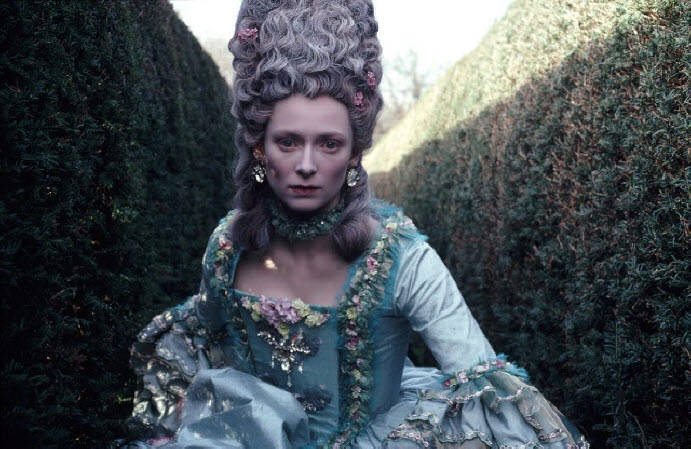
Along the following passage of time, Orlando continues the quest for becoming truer to himself, and the movie has a lot of stylish fun as he bounces from one chapter of his ongoing life to another. Thanks to the costume design by Sally Potter and the production design by Ben Van Os and Jan Roelfs (They were all deservedly Oscar-nominated for this movie, by the way), the film is sumptuously decorated with a number of different period atmospheres, and the timeless quality of its titular figure is often accentuated by the deliberately anachronistic score by Potter and her co-composer David Motion.
When he subsequently reaches the top of his political career outside England, Orland feels like going nowhere at all as a man, and this somehow leads to a sudden sexual transformation. After several days of continuous sleep, he finds himself becoming a woman, and this does not trouble Orlando at all. I am sure that this line will come close to many transgender folks out there: “Same person. No difference at all… just a different sex.”
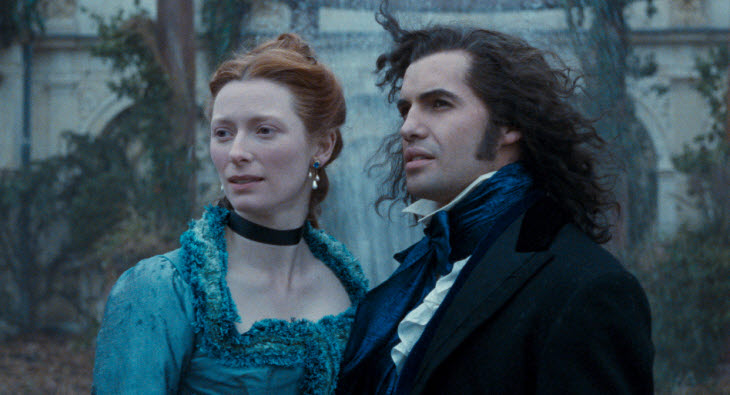
Now Orlando feels more comfortable with her changed sexual identity, but, of course, there come several catches. She has to deal with a lot of sexism and misogyny from those men around her, and, above all, she finds herself having far less freedom and privilege as being legally regarded as a woman now. She consequently loses her title and estate, but she still does not give up her continuing pursuit of happiness and individuality at all – even when she later gets a nice opportunity for romance via someone willing to not only accept her as who she has always been for many years but also recognize her independent individuality.
The movie is surely the showcase of the undeniably versatile talent of Tilda Swinton, whose own uncanny presence is one of the main reasons why the movie works so well from the start. Besides fluidly flowing along with her fantastically flexible character without any misstep, Swinton effortlessly brings both humor and sensitivity to her character’s complicated personal journey across several centuries, and she is especially moving when her character finally becomes happier than ever around the end of the film. Although this is not actually in Woolf’s novel, she would probably approve of it in my humble opinion.
On the whole, “Orlando” is one of the high points in Porter’s interesting filmmaking career, and I am really glad to watch it at last. When I came across its promotional poster in 1994, I was just a little cinephile kid who still needed to learn more about movies, but I was quite mesmerized by the striking presence of Swinton in one of those beautiful costumes in the movie. Sadly, it somehow remained elusive for me for more than 30 years, and now I am much older compared to that time, but the movie feels quite fresh and ageless nonetheless. As long as movies are alive and well for us, the movie shall always remain in that way, and it will surely leave you something to reflect on those ever-persistent matters of gender identity and individuality.


 Seongyong's Private Place