
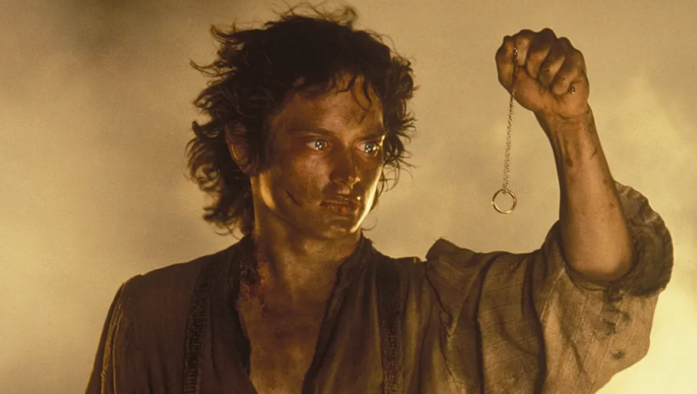
Peter Jackson’s 2003 film “The Lord of the Rings: The Return of the King”, which was re-released in selected South Korean theaters a few weeks ago, did almost everything it was expected to do as the end of its ambitious trilogy. Besides being the aptly grand finale to follow its two predecessors, the movie provides more awe, wonder, and spectacle to engage us for more than 3 hours, and we gladly forgive its rather overlong ending.
At the beginning, the movie follows the ongoing journey of its two hobbit heroes, Frodo Baggins (Elijah Woood) and his loyal companion Samwise Gamgee (Sean Astin). As shown at the end of “The Lord of the Rings: The Two Towers” (2002), Gollum (Andy Serkis), a wretched creature who once owned that powerful magic ring currently possessed by Frodo, seems quite willing to help Frodo and Samwise’s increasingly perilous journey toward the destruction of that ring, but, not so surprisingly, he soon begins to show his treacherous sides again, and that certainly makes Samwise more watchful than before.
However, Frodo gradually becomes more fragile and unstable as being more burdened by the growing power of that ring, which he must destroy for saving his world. Despite Samwise’s constant support and devotion, he comes to listen more to Gollum instead, and he eventually makes an unwise choice of distancing himself from his ever-dependable companion.
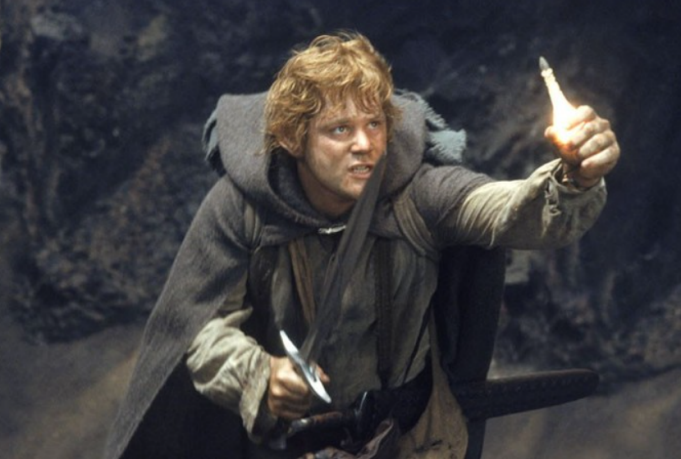
While these three main characters get closer to the realm of darkness dominated by the mighty evil force looking for the ring to regain his absolute power, the movie expectedly throws a lot of gloomy horror and despair onto the screen. There is a striking scene where the massive army of darkness is unleashed under the leadership of a truly terrifying evil entity, and then we later get an intensely creepy scene involved with a big and gruesome creature as nasty as Gollum.
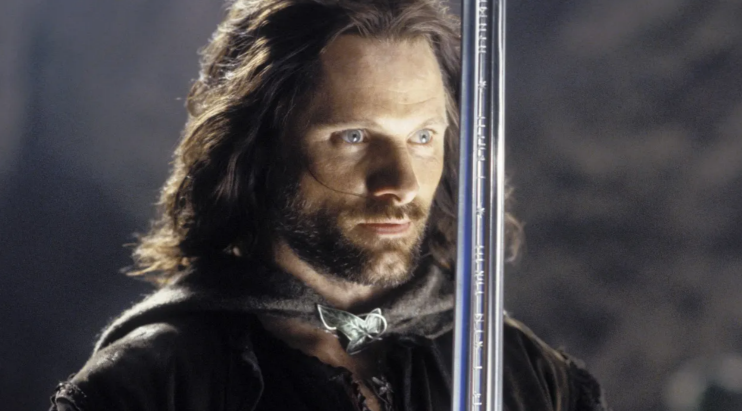
Meanwhile, the movie also pays attention to what several other members of the Fellowship of the Ring try to do for helping Frodo and Samwise’s journey. Although the big victory achieved by them and their valiant allies threw a major blow to their opponent, their opponent is now preparing for the ultimate battle to determine the fate of their world, and Gandalf the White (Ian McKellen) and Aragorn (Viggo Mortensen), who becomes more prepared for his eventual destiny of becoming the new king to open the new era of their world, are all the more determined to try hard for distracting their opponent as long as possible.
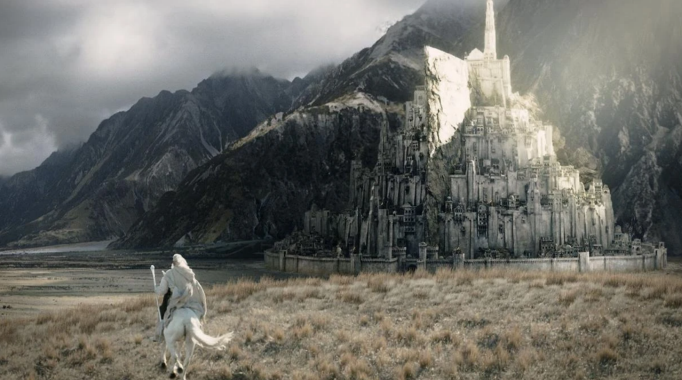
What follows next is a series of spectacular moments worthwhile to watch from big movie theater screen. When Gandalf the White and his hobbit companion Peregrin Took (Billy Boyd) arrive at a big old city which will soon be the inevitable battleground between good and evil, the camera of cinematographer Andrew Lesnie, who won an Oscar for “The Lord of the Rings: the Fellowship of the Ring” (2001), gives us several breathtaking shots to behold for small and big details in this big old city, and we get more accustomed to this new background before the battle eventually begins.
During this battle sequence, the movie does not disappoint us at all. While a lot of things happen here and there amid frequent crashes and bangs, we seldom get confused thanks to Jackson’s skillful direction, and the movie also often takes some time for developing its story and characters more. While Ian McKellen and Viggo Mortensen have several showy moments as expected, Billy Boyd and Dominic Monaghan ably balance their Hobbit characters between humor and drama, and John Rhys-Davies, Orlando Bloom, Bernard Hill, Miranda Otto, John Noble and David Wenham also have each own moment as the other crucial parts of the story.
In the end, everything in the story culminates to the eventual end of Frodo and Samwise’s journey, and that is where the movie shows more heart and soul than before. As Elijah Wood and Sean Astin diligently carry this big expected part together, Andy Serkis often steals the show again as before, and there is a brief moment of ironic poignancy when his loathsome but ultimately pitiful character is finally liberated from his longtime obsession with that ring.
I must point out again that the ending of the film still feels like sort of overkill, but I guess Jackson can indulge himself a bit during its last 20 minutes, considering what he and his cast and crew gloriously and passionately achieved in the trilogy. After deservedly winning three Oscars for this film (It won no less than 11 Oscars including the ones for Best Picture and Best Director, by the way), he has never reached to this level of achievement during last 23 years except “King Kong” (2005), and he only came to disappoint us with that unnecessarily bloated Hobbit trilogy in the 2010s, though I wholeheartedly forgave him later for his critically acclaimed documentary film “They Shall Not Grow Old” (2018).
In conclusion, “The Lord of the Rings: The Return of the King” remains quite engaging and thrilling just like its two predecessors. Although they all look a little dated in terms of technical aspects at present, they deserve to occupy their own place in the cinema history right next to many other memorable epic films such as “Ben-Hur” (1959) or “Titanic” (1997), and I am glad to report to you that they still work as well as before.


 Seongyong's Private Place