

Bertrand Bonello’s latest film “The Beast” is an odd but intriguing work mainly driven by a growing sense of anxiety surrounding its multiple narratives. In each narrative, the heroine cannot help but become more nervous over whether something terrible may happen as she gets attracted to a certain figure, and, boy, the movie does not disappoint us at all after deftly juggling its multiple plot lines for our interest and entertainment.
The main frame of the story is set in Paris in the middle of the 21st century. In this near-future world, every human being has been under the strict management of some powerful artificial intelligence, and a young woman named Gabrielle (Léa Seydoux) is going to have a “DNA purification” surgery, which will purge any emotional memories from her past lives for making her less emotional than before. Although she is rather reluctant to say the least, she is still willing to subject herself for better job opportunities, and a series of the following surgeries are supposed to have her face and then get over whatever has been remembered on her unconsciousness.
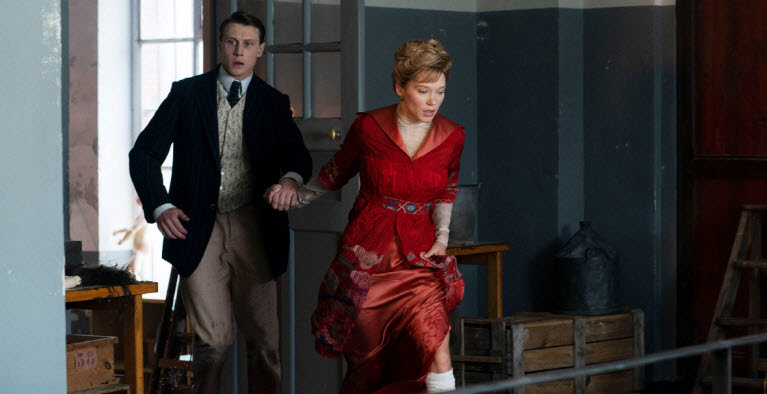
One of Gabrielle’s past lives to face happened in Paris, 1910. In this past live of hers, she is a well-known musician incidentally married to a successful dollmaker, and her supposedly satisfying life gets unsettled by an accidental encounter with Louis (George MacKay), a young British gentleman who happens to be at an evening party attended by her and her husband. As they talk more with each other in private, something seems to click between them, but Gabrielle hesitates to get closer to this handsome dude because, well, she has been quite afraid that something really bad is going to occur while they continue their little affair. She does not even know what, when, how, and why that will happen, but she has somehow felt that somewhere in her mind, and that makes her all the more nervous.

Nevertheless, Gabrielle only finds herself getting more attracted to Louis – even after she receives what may be the last warning on whatever will happen in the end. She comes to spend more time with Louis, and we are not so surprised when she later shows him around her husband’s big factory filled with lots of materials for dolls to be produced.
Meanwhile, the movie also observes what is happening around Gabrielle in her 21st century life. She comes across Louis again, and they soon get interested in each other, but, again, she does not feel that right about what is going on between them. She continues her surgery process, and this leads her mind to the memories of another past life of hers besides the previous one.
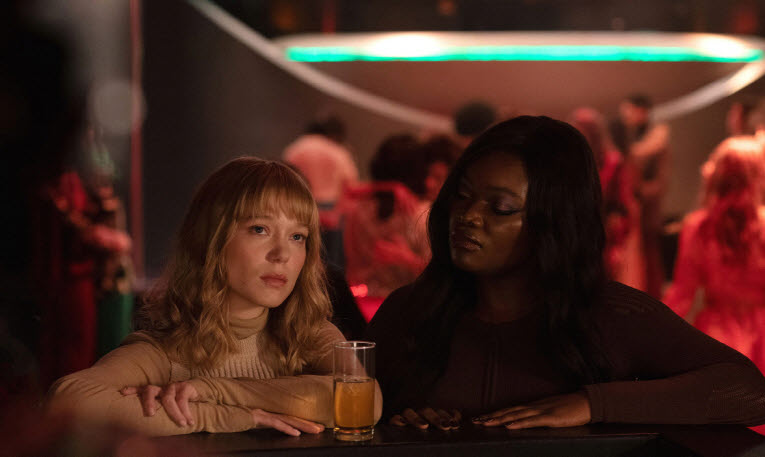
This past life of hers, which is incidentally set in LA, 2014, is not romantic at all compared to the previous one. Louis in this case is now your average incel lad who has been very, very, very angry about failing to have any romantic or sexual relationship, and the mood becomes more disturbing as he becomes increasingly fixated on Gabrielle, who is an aspiring young actress currently staying alone in a big modern house as its temporary tenant/caretaker.
Gabrielle has already had that disturbing feeling she cannot articulate well, and the movie goes for more disturbance as her mind is somehow thrown into more anxiety and confusion. At one point in the middle of the film, the image gets distorted a bit for accentuating a sense of shock and disorientation upon the heroine, and then we get an unnerving scene where Gabrielle receives the identical warning via the Internet by some unlikely coincidence.
Before eventually reaching to a certain narrative point, the screenplay by Bonello, which is loosely based on Henry James’ short story “The Beast in the Jungle”, is rather vague about whatever may happen in the end of each narrative in the story. This can be rather frustrating for some of you, but the movie keeps us interested while never losing its way among the multiple narratives, and the following moments of payoff are unexpectedly striking in each own way thanks to the skillful handling by Bonello and his crew members including cinematographer Josée Deshaies and editor Anita Roth.
Above all, the movie is constantly held well together by the good performances from its two lead performers, who effortlessly move among several different versions of their respective roles. Léa Seydoux, who has been one of the most interesting actresses to watch for more than 10 years, is simply masterful in the subtle presentation of the accumulating dread and worry behind her character’s detached appearance, and she and George MacKay, who has been steadily advanced since his breakout performance in Sam Mendes’ Oscar-winning film “1917” (2019), complement well each other as their characters tentatively and nervously revolve around each other along the story.
On the whole, “The Beast” is another engaging work from Bonello, who drew my attention for the first time with “House of Tolerance” (2011). While I did not watch his several subsequent films including “Saint Laurent” (2014) and “Nocturama” (2016), “The Beast” impressed and intrigued me as much as “House of Tolerance” even though I needed to be a bit more patience at first, so I recommend you to take a chance with this rather baffling but undeniably interesting arthouse film.


 Seongyong's Private Place
Pingback: 10 movies of 2024– and more: Part 2 | Seongyong's Private Place